The IMEC corridor: how the US, the EU and India are building an alternative to Chinese routes
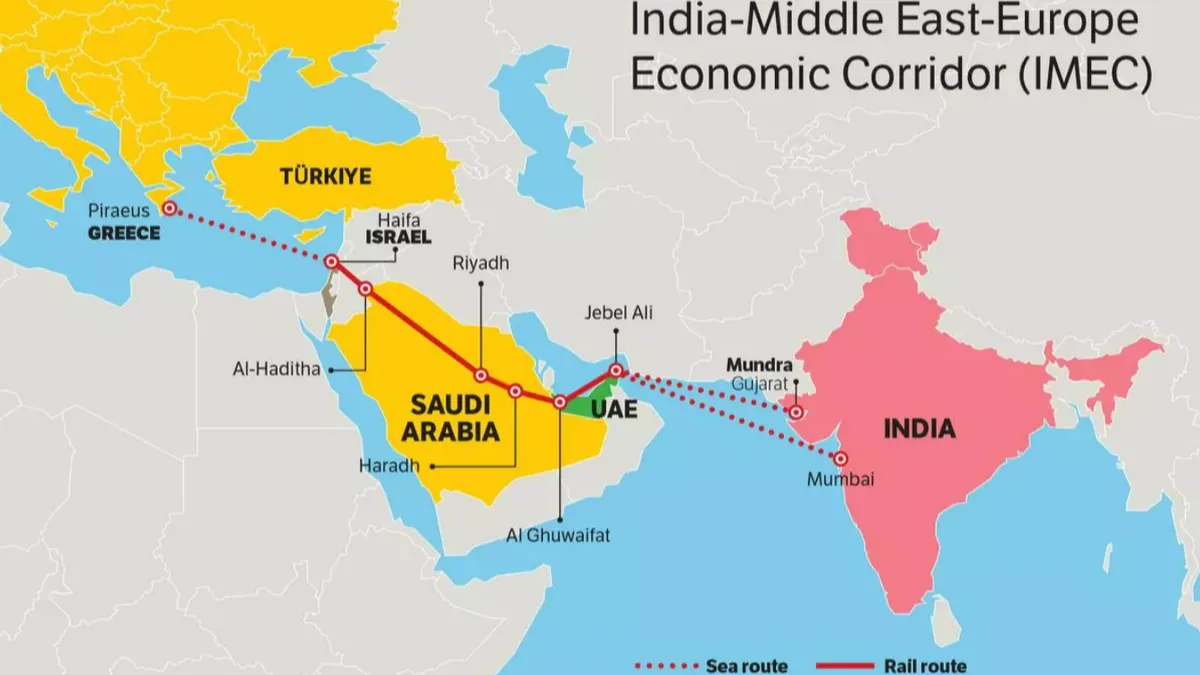
IMEC (India-Middle East-Europe Economic Corridor) is an infrastructure project backed by the US, the EU, India, Saudi Arabia and the UAE. Its goal is to link India, the Middle East and Europe by sea and rail and give world trade a counterweight to China’s Belt and Road Initiative.
What IMEC consists of
The project has two parts:
- The Eastern Corridor runs from India to the Middle East — the UAE, Saudi Arabia and Jordan.
- The Western Corridor continues from the Middle East to Europe via Greece and Italy.
The key hubs are ports in India, the UAE and Saudi Arabia, with Greece and Italy as the gateways to Europe.
Why it is called a rival to China
- Less dependence on the BRI. The US and the EU want to weaken China’s control over trade routes through Central Asia and Africa.
- Faster delivery. Estimates suggest the route could cut transit time between India and Europe by 40%.
- Interest from the Gulf states. Saudi Arabia and the UAE want to rely less on oil and work more closely with India and the West.
- Not just cargo. Undersea internet cables and energy infrastructure are planned along the corridor.
Global Gateway — another EU initiative
IMEC is not the West’s only answer. In 2022 the EU launched Global Gateway. Its first projects include data cables on the Black Sea floor and a dam and hydropower plant in Cameroon. By 2027 the EU and member states aim to mobilise up to €300 billion for the programme.
What could get in the way
- Money. China has already invested hundreds of billions of dollars in the BRI, while Western projects are just starting.
- Instability. IMEC runs through the Middle East, and Global Gateway covers regions with high geopolitical tension.
- The Suez Canal. The new route reduces the canal’s role, so Egypt may oppose it.
If these projects succeed, the balance of world trade will shift — above all on the India–Europe route, and in Africa and the Middle East. But they still face many financial, political and infrastructure hurdles.